science-art

Contemporary Artist Bridges Quantum Physics and Visual Art Through Revolutionary Creative Philosophy

Source Insider Weekly

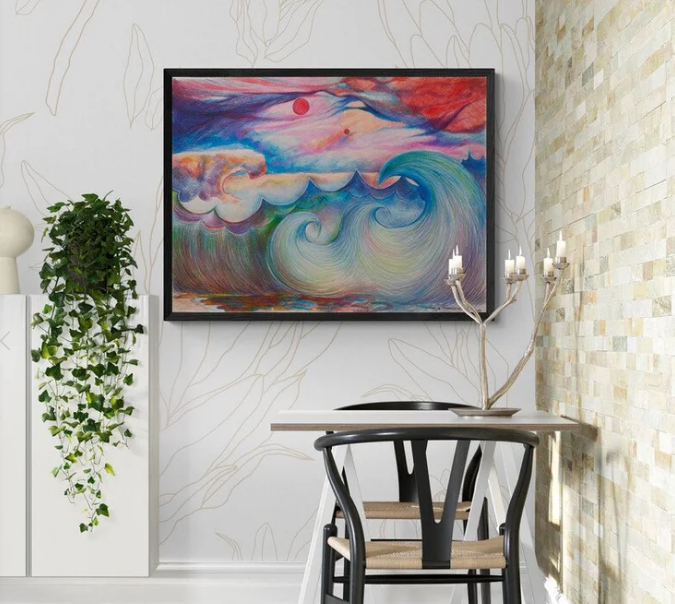
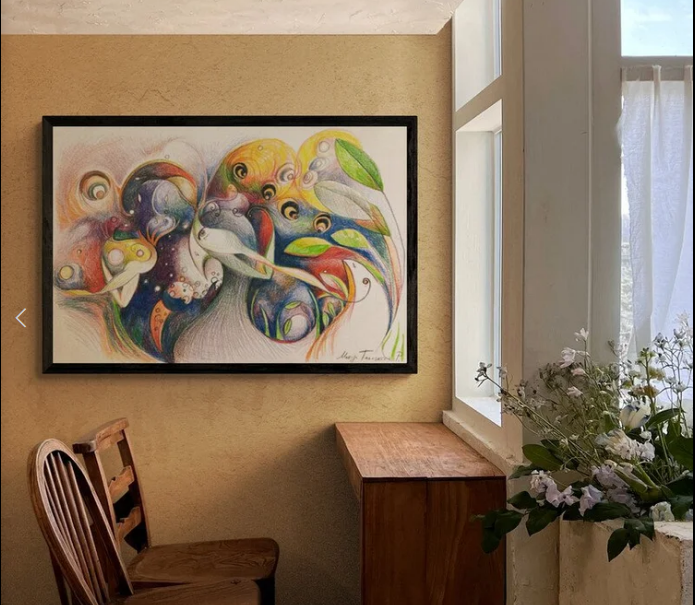
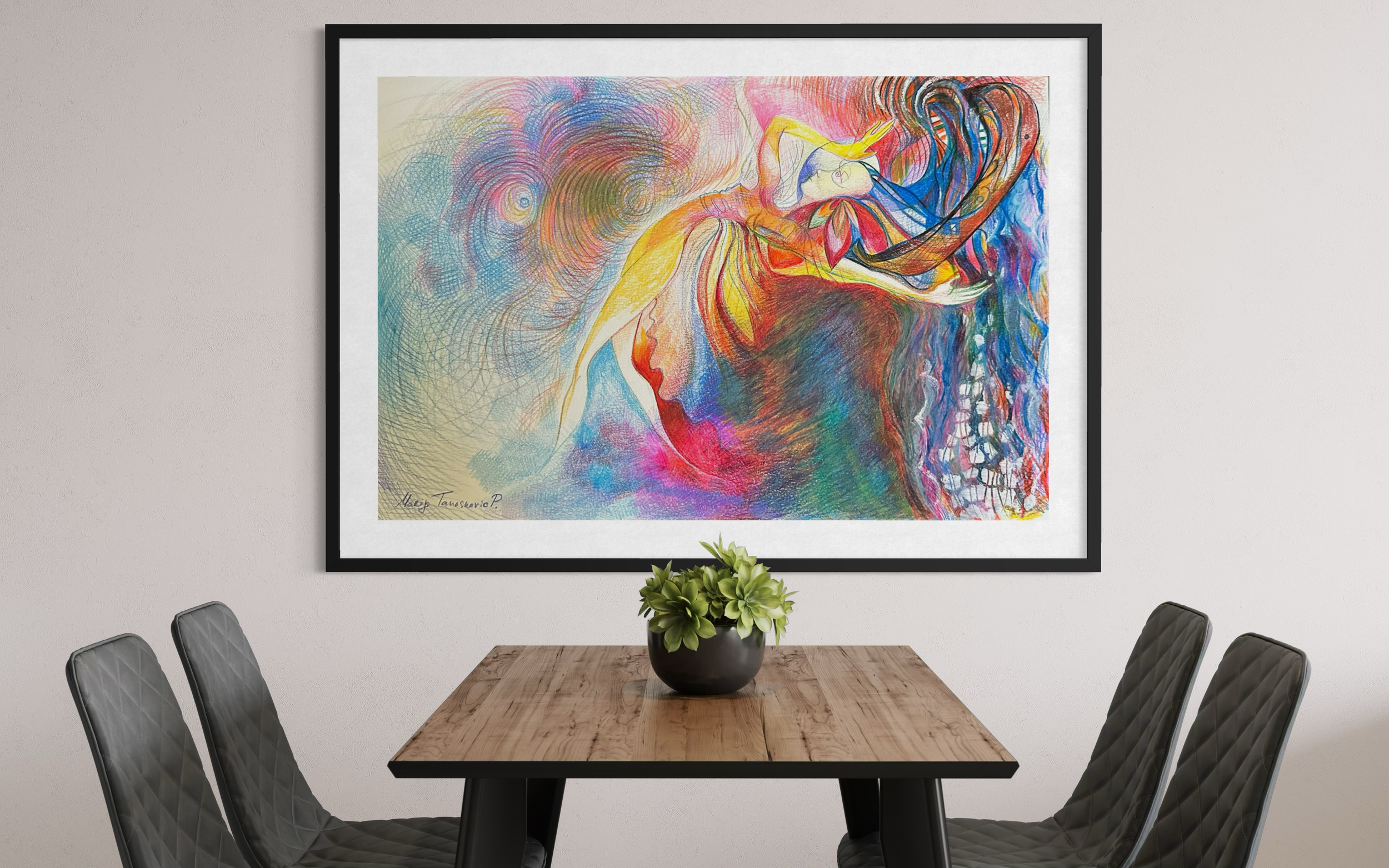
The intersection of art and science has taken an unexpected turn through the work of internationally acclaimed artist Marija Tanaskovic Papadopoulos, whose unique approach to visual creation draws directly from principles of quantum mechanics and modern physics. This unconventional methodology has captured the attention of art market experts and curators worldwide, establishing her as one of the most investable contemporary artists working today.

The recognition has been substantial. Art Celebrity magazine dedicated an entire edition to Tanaskovic Papadopoulos’s work in 2025, while Celebrity Masters named her a Top Artist protagonist of contemporary art in 2024. Her accolades include prestigious honors such as the Leonardo Da Vinci Award, Michelangelo Award, and the Franco Di Assisi Award for human rights, among others. Marquis Who’s Who in America featured her in their latest edition, cementing her status in the international art community.

What sets this artist apart is her scientific approach to understanding how art functions in human consciousness. Drawing from the famous double-slit experiment in quantum physics, she explores how the act of observation itself transforms reality. In quantum mechanics, the process of observation causes wave functions to collapse into particles, fundamentally altering the state of matter at the subatomic level. 

The scientific dilemma called a measurement problem is related to the phenomenon of observation during the double slit experiment. Science cannot still determine with certainty if the measurement instrument only, or the observer’s mind is an additional part of environment involved in collapsing the wave function into a particle. However, this is the main part of Tanaskovic Papadopoulos attention when she applies this principle to visual art, proposing that viewers don’t simply observe artwork passively but actively participate in creating its meaning and impact.

Marija is aware that bridge between two levels, a level of a particle (quantum level) and  the level of the world we are living in (macro level), is not possible to be created within the general scientific approach because of completely different laws of physics that exist within them. This is exactly why it is so difficult to connect the two.

But the concept she presents throughout the active observation as a creation, actually developed her idea to involve the story about the duality of the particle and the wave, in order to explain her artist statement in exact way. She mentions that our brain waves must be showing the vibration of our consciousness that she symbolically explained as a ‘place’  where we are determining what is the actual information we are analyzing. This is why we refer to consciousness often as the awareness.  Even if we don’t know how to decode them, our brain is emitting certain types of brain waves while we are thinking.  That means if the information field around any person theoretically exists, it would be created by that person’s consciousness.  We can understand this simple truth from our everyday life that she is, also, explaining this way: The subject and quality of our thoughts will determine the reality we have, after some time, which will spontaneously bring a mood that is corresponding to those thoughts. 

Her artist statement reflects this philosophy: “Visual Art is all about passing energy to other people through the symbols and vibration of lines, color wavelengths, and shapes of the artwork in a space that surrounds it, while the meaning of the artwork is not only what composition actually presents, but a specific structure of that art piece, that makes a human being able to notice a beauty as a source of harmony.”

The theoretical foundation extends to Wheeler’s delayed-choice experiment, which demonstrates how present choices about measurements can retroactively determine a particle’s past behavior. In her artistic practice, this translates to the idea that an observer’s engagement with an artwork creates ripple effects that extend beyond the immediate moment of viewing. The artwork becomes a trigger, while the observer introduces the piece’s ideas into reality through their own interpretation and emotional response.

This approach positions the audience as co-creators rather than passive recipients. According to her philosophy, observers shape the world alongside the artist by gradually manifesting the artwork’s message into reality, much like ocean waves gradually shape coastal stones. The electromagnetic waves produced by human thought patterns, she suggests, create vibrations that influence both quantum and macro levels of existence.

The practical implications of this theory extend to why exposure to quality art matters. Since thoughts directly influence decisions and shape individual realities, the type of art one engages with becomes crucial. The vibrations produced through mental engagement with artwork carry information that affects life experiences in tangible ways.

Collectors and art enthusiasts have responded enthusiastically to both the philosophy and the work itself. The artist’s online gallery showcases original pieces and prints that have earned consistent five-star ratings from customers, who praise the quality, detail, and color work in her compositions, as well as the professional handling of artwork delivery.

The convergence of quantum physics and visual art represents more than an intellectual exercise. It offers a framework for understanding how art functions as more than decoration or cultural artifact. In this view, artworks serve as catalysts for consciousness, with each viewer’s observation contributing to an ongoing process of reality creation.

This revolutionary approach challenges traditional boundaries between scientific inquiry and artistic expression. By grounding her creative philosophy in established physics experiments while maintaining the mystery and beauty essential to art, Tanaskovic Papadopoulos has carved out a unique position in contemporary art discourse.

The implications reach beyond gallery walls. If observation at the quantum level can influence physical reality, and if human consciousness operates through similar electromagnetic principles, then the act of viewing art becomes an active participation in shaping the world. This perspective transforms museums and galleries from repositories of culture into laboratories of consciousness, where each visitor’s engagement contributes to an ongoing experiment in human potential.

For those interested in exploring this intersection of art and physics, Marija Tanaskovic Papadopoulos’s work offers both aesthetic beauty and intellectual depth. Her pieces serve as both visual experiences and philosophical propositions, inviting viewers to consider their role not just as observers but as active participants in the creative process that extends far beyond the canvas.